John Brown has lived in Savoy for 25 years, long enough to remember driving toward Willard Airport and passing stretches of open field where the village just stopped. He's watched those gaps fill in with subdivisions, one after another, until Savoy became the fastest-growing municipality in Champaign County for two decades running. That's not local pride talking. It's in the village's own 70th-anniversary accounting this spring: Savoy more than doubled in size between 2000 and 2024, and its population has grown more than 23 percent since 2010 alone, reaching just under 9,000 residents.
Here's the part that should catch a buyer's attention. In 2025, Savoy's median sale price jumped 15.9 percent to $400,000, the largest one-year increase of any town in the county. Mahomet, another popular growth suburb, moved barely at all: up just 1.1 percent to $384,250. The City of Champaign, the county's largest market, also crept up only 1.1 percent, to $237,500. Urbana climbed a more noticeable 13.5 percent to $225,000. Across the whole county, the median rose 7.2 percent to $242,950.
If you're comparing those numbers the way most buyers do, ranking towns by how fast they're "appreciating," you're reading them wrong. And the reason why has more to do with a stalled railroad underpass than with anything happening to existing home values.
A Rising Median Doesn't Always Mean Rising Value
A median price is the middle of whatever actually sold that year, not a measure of what any specific house gained. When a town's median jumps 15 percent in twelve months, there are two ways to explain it: existing homes got meaningfully more valuable, or the mix of what sold changed. In Savoy, it's almost entirely the second one.
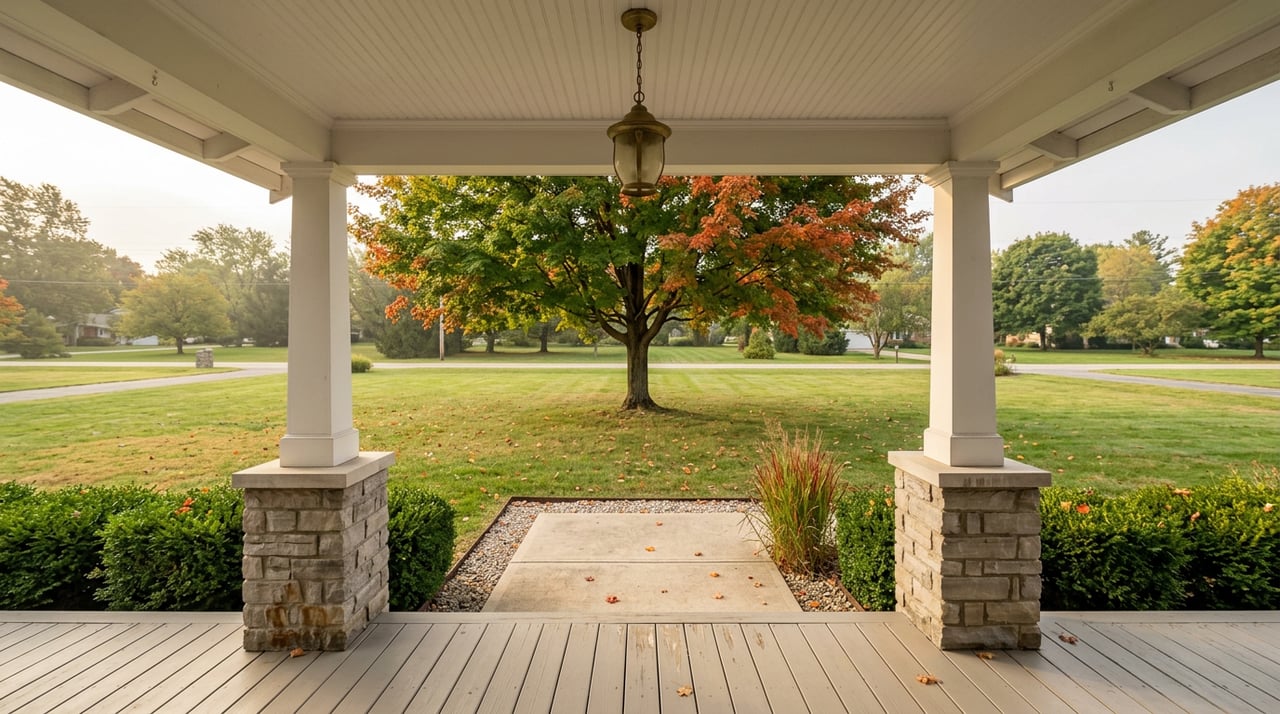
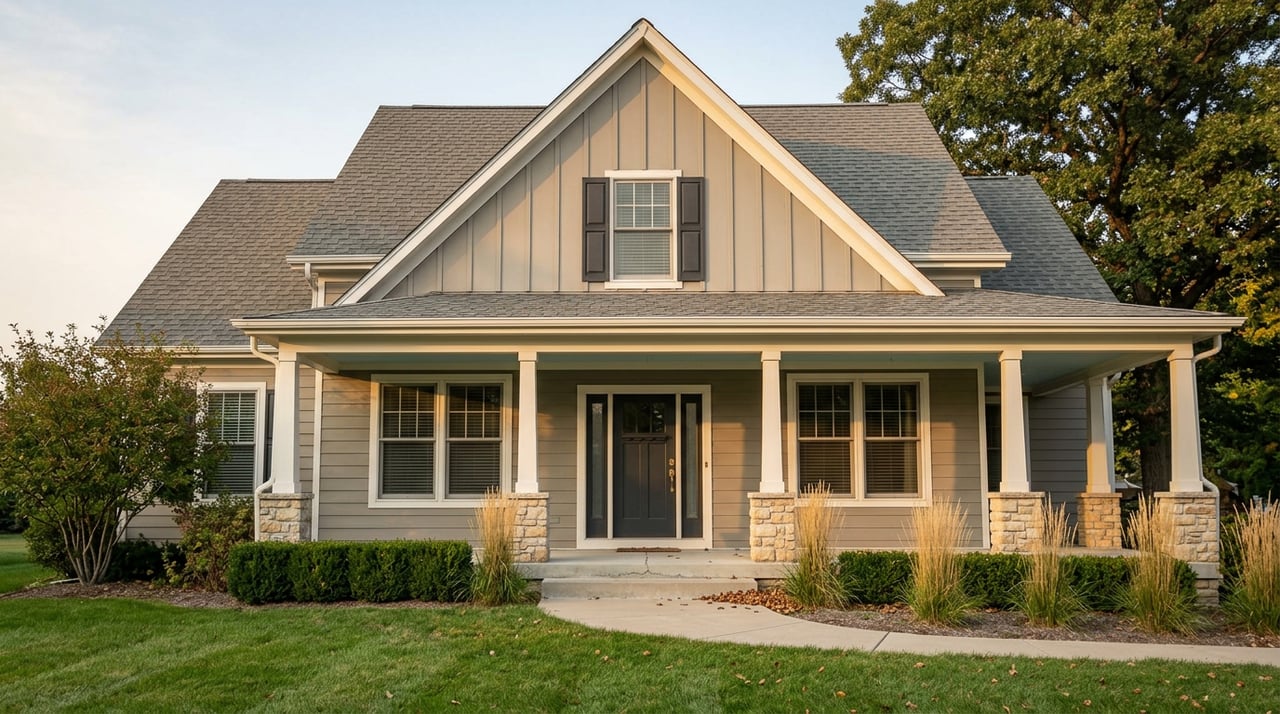
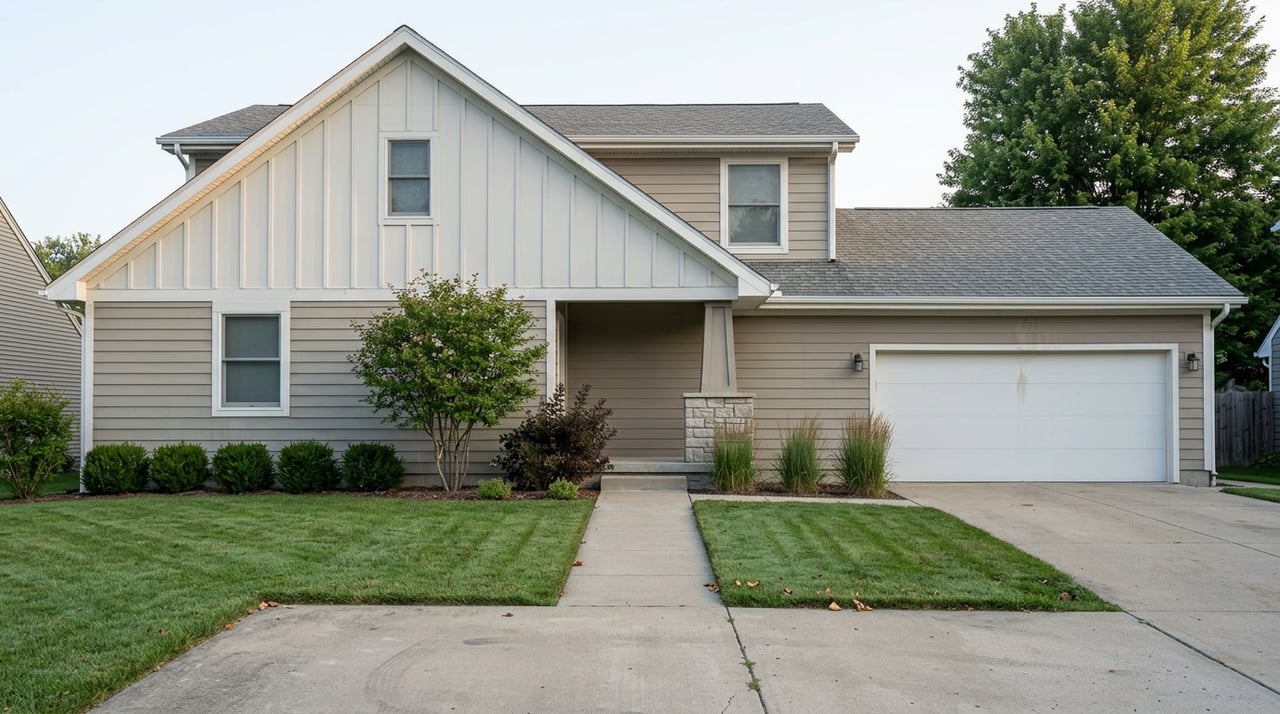
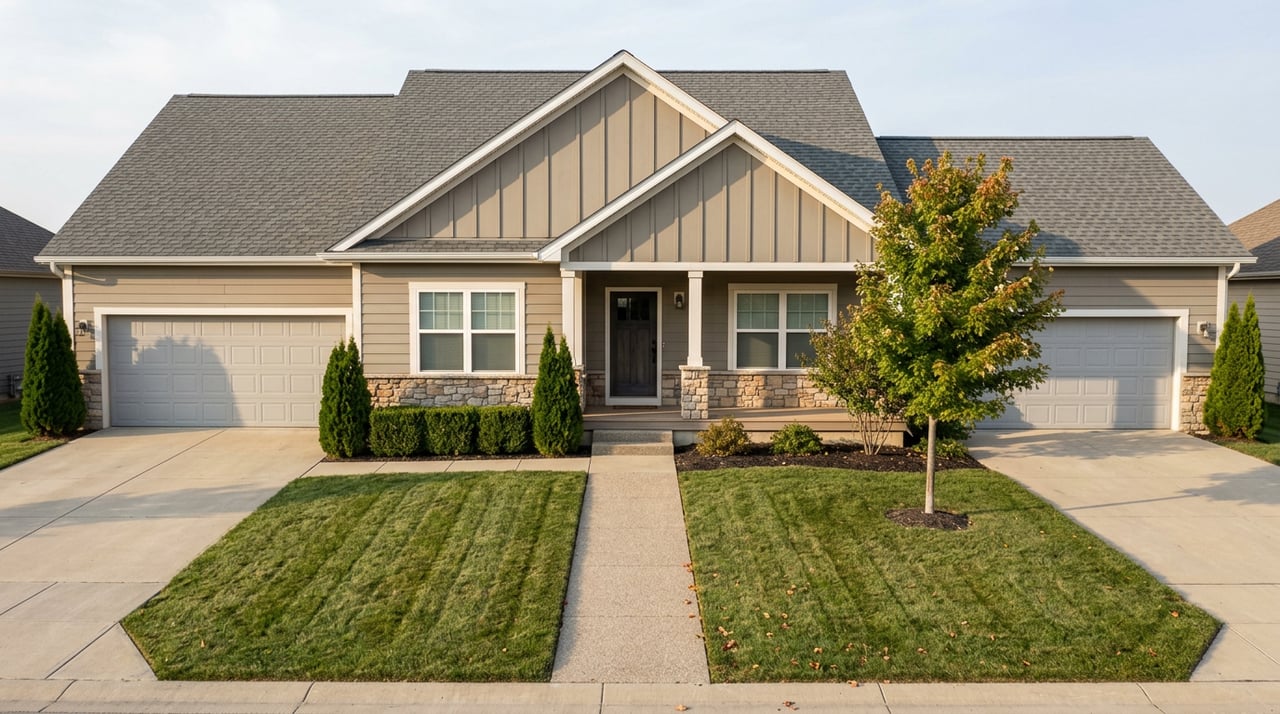
Look at what's been closing in Savoy over the past year and you'll find a heavy share of new construction: homes going up in the Fieldstone subdivision off Route 45, in Prairie Fields, and in the newer Prairie Meadows and Lake Falls developments the village highlighted in its own growth update this spring. New construction sells at a premium to resale housing almost everywhere, and when it makes up a bigger slice of a small town's annual sales, the median rises even if not a single existing home changed hands for more money than it would have a year earlier.
Mahomet tells the same story from the other side. Its median barely moved in 2025, not because Mahomet homes aren't in demand, but because the mix of what sold there that year looked more like the year before, resale-heavy, without a fresh wave of new subdivision closings tilting the number.
| Market | 2025 Median Sale Price | Year-Over-Year Change |
|---|---|---|
| Champaign County (overall) | $242,950 | +7.2% |
| City of Champaign | $237,500 | +1.1% |
| City of Urbana | $225,000 | +13.5% |
| Village of Savoy | $400,000 | +15.9% |
| Village of Mahomet | $384,250 | +1.1% |
Urbana's double-digit jump fits the same pattern from a different corner of the county, driven in part by new-construction activity in developments like Savannah Green, where a builder resumed work on dozens of remaining lots in recent years.
Why the Growth Landed in Savoy Specifically
None of this is random. Savoy's building boom is tied to a deliberate, decades-in-the-making infrastructure project: the Curtis Road Grade Separation and Complete Streets Project, an underpass meant to carry Curtis Road beneath the Canadian National railroad tracks that currently bisect the eastern half of the village. The village's own description of the project is direct about its purpose. It's designed to serve as a reliable southern gateway to the University of Illinois and to open up corridor access for future research, development, and medical facilities along Curtis Road between I-57 and U.S. 45.
That's the growth story builders and buyers are pricing in when they pay a premium for a new house in south Savoy. It's also why the village is simultaneously clearing land for a new downtown at the corner of Dunlap Avenue and Church Street, working with a Downtown Development Group to build the kind of mixed residential and commercial district that doesn't exist there yet. Village Administrator Andy Quarnstrom described the goal to Illinois Public Media as a place designed so people can work and live and play right in downtown Savoy.
The Bet Isn't Finished Yet
Here's what the median price doesn't tell you: the infrastructure that justifies Savoy's growth premium is still years from completion, and its timeline keeps moving.
The Curtis Road project was originally funded through a mix of local money and a $22.7 million federal RAISE grant, covering roughly half of an initial cost estimate just north of $40 million. Village leaders once expected construction to start in 2026 and wrap by 2028. Inflation changed that math. By early 2025, the News-Gazette reported the price tag had climbed by roughly a third, pushing the total cost above $50 million, with Village President John Brown telling the paper plainly that he doesn't want to see the taxpayers of Savoy saddled with the big bill in the end. The revised outlook, as of last year's village updates, has construction potentially starting in 2027 and running two to three years beyond that, meaning the corridor Savoy is building its growth story around may not be functionally complete until closer to 2030.
That's not a reason to avoid Savoy. It's a reason to know what you're actually buying into. A new-construction premium there today is a bet on a research and medical corridor that's funded, planned, and real, but not finished. If you're purchasing for the next two years, you're buying current subdivision quality and a shorter commute to campus. If you're purchasing for the next ten, you're buying ahead of infrastructure that's still under construction.
What the Flat Numbers in Champaign Are Actually Telling You
Meanwhile, the City of Champaign's 1.1 percent median growth in 2025 looks sleepy next to Savoy's number, but sleepy isn't the right word for what's happening there. Champaign County Association of Realtors President Deana Gauze told the Daily Illini this summer that new construction hasn't fully caught up to population needs and buyer demand, and that a lot of existing owners are simply staying put because they don't want to trade a low mortgage rate for a new one. That combination, rate-locked owners and thin new supply, keeps the typical home that sells in Champaign looking a lot like the typical home that sold there the year before: modest, often older, not dramatically pricier. It shows up as speed instead of price. Homes were moving in around 37 days countywide last year, with roughly half of all sales closing at or above the original list price.
The friction isn't limited to single-family supply either. A proposal to build apartments in west Urbana drew a contentious debate at a City Council committee meeting in May, with the local magazine Smile Politely publishing a sharp critique of officials who appeared inclined to block it. Whatever side of that debate you land on, it's a useful data point: adding housing stock inside the built-out core, whether single-family or multifamily, is genuinely harder than adding it on a greenfield lot at the edge of Savoy or Mahomet. That's a structural reason the core and the growth suburbs are going to keep behaving differently, not a temporary quirk of one year's numbers.
Frequently Asked Questions
Does Savoy's 15.9 percent price jump mean existing Savoy homes got that much more valuable in one year? No. It mostly reflects a bigger share of new-construction sales in the mix, which close at higher prices than resale homes regardless of what's happening to the value of an existing house down the street.
When will the Curtis Road underpass actually be finished? As of the village's most recent public updates, construction could begin around 2027 and take two to three years to complete, putting a realistic finish somewhere around 2030. That timeline has already slipped once due to inflation-driven cost increases.
Is new construction always going to cost more than resale in the same town? Generally yes, new construction typically carries a premium over comparable resale homes, which is part of why towns adding a lot of new subdivisions in a given year tend to see their median price move more than towns where most sales are existing homes.
If you're weighing a new build in Savoy against an existing home in Champaign or Urbana, the math depends on your time horizon as much as the price tag. That's exactly the kind of comparison worth walking through with someone who tracks these towns individually, not just as a county average. The Tracy Slater Group works across Champaign, Savoy, Urbana, and the rest of Champaign County every week. Schedule a free consultation and we'll help you figure out what you're actually paying for.