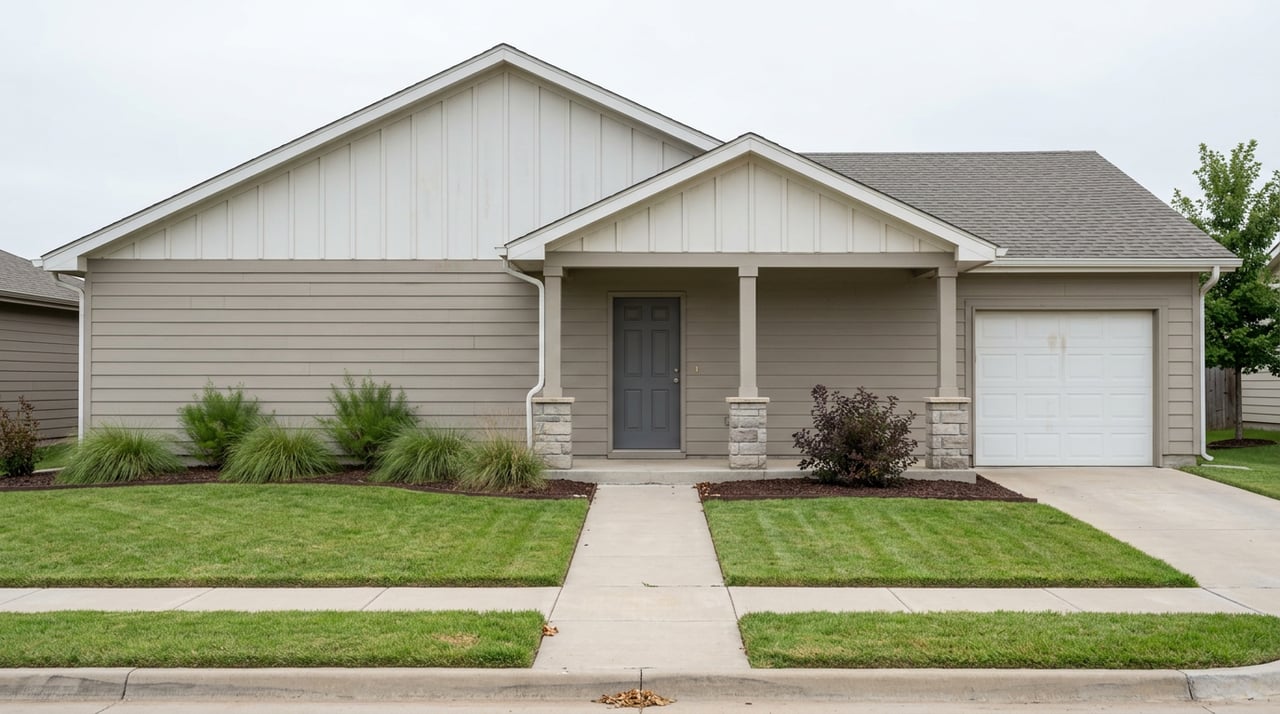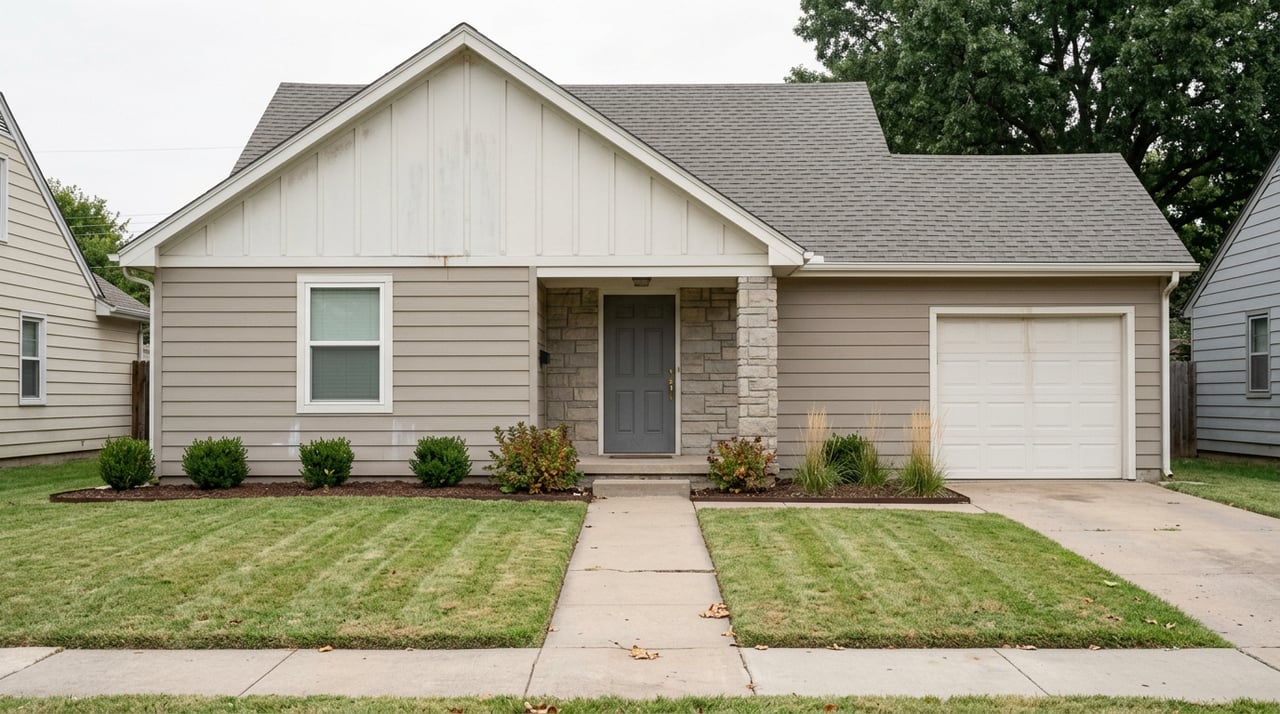
Quick question before you get too attached to that Decatur listing: which town in Macon County has the highest property tax rate?
If you guessed Forsyth, the county's priciest submarket, you'd be making a reasonable assumption. You'd also be wrong. The highest effective property tax rate in the entire county belongs to Decatur itself, the same city where you can still find a house for under six figures.
That reversal matters if you're comparing Decatur to greater Champaign, or comparing Decatur to its own suburbs, because the math on a "cheap" home doesn't work the way the listing price suggests.
The gap everyone sees on the listing page
Start with the number that gets all the attention. Decatur homes were listed at a median price of roughly $105,000 as of July 2026. In the city of Champaign, the median home value sits at $199,700 based on the latest American Community Survey figures. Run the division and Decatur looks like it costs a little more than half as much to buy.
That's the story most people walk away with. Half the price. Twice the house for your money, or the same house for half the money, depending on how you want to frame it. It's not wrong. It's just incomplete.
The number the listing page never shows you
Property taxes in Illinois aren't set by the state. They're set locally, layered by school district, municipality, park district, and whatever special service areas happen to overlap your parcel. That means two homes ten minutes apart can carry meaningfully different tax loads even at the same price point, and it means the "cheap city" and the "expensive suburb" story can flip once you look at rates instead of prices.
Here's the comparison that actually matters if you're choosing between Decatur and Champaign:
| Decatur | City of Champaign | |
|---|---|---|
| Median home value | ~$105,000 (Jul 2026) | $199,700 |
| Effective property tax rate | 2.64% | 2.24% |
| Approximate annual tax bill | ~$2,772 | $4,466 |
Decatur's effective rate of 2.64 percent is the highest of any city in Macon County, while Champaign's rate on its own median-valued home works out to 2.24 percent. So a Decatur home priced at about 53 percent of a comparable Champaign home doesn't come with a tax bill that's 53 percent as large. The bill lands closer to 62 percent, because the rate itself is doing some of the work against you.
Zoom out to the county level and the pattern holds. Macon County's median effective property tax rate is 2.49 percent, well above Champaign County's 2.07 percent on a median home value of $205,100. Illinois as a whole already carries one of the highest effective property tax rates in the country, so neither county is cheap in absolute terms. But within that expensive state, Macon County's rate runs higher than Champaign County's, not lower, even though its homes cost roughly half as much.
Why the cheapest city carries the highest rate
The mechanism isn't mysterious once you see it. Tax bills are a function of rate times value, and a smaller home value needs a bigger rate to fund the same fixed costs, the school levy, the library district, the fire protection district, that don't shrink just because home prices are lower. A city with modest home values has to charge a steeper percentage to raise the same dollars per resident that a pricier suburb raises at a gentler rate.
You can see this play out inside Macon County itself. Boody, one of the county's smallest communities, carries the county's lowest effective rate at 1.94 percent. Forsyth, the county's most expensive submarket with a median list price around $367,500 as of May 2026, has a median annual tax bill of $6,656, the highest dollar figure in the county. But back that bill into Forsyth's own home values and the implied effective rate comes out closer to 1.8 percent, noticeably gentler than Decatur's 2.64 percent. Forsyth residents pay more in raw dollars because their homes are worth more. They aren't paying the county's highest rate. Decatur is.
Three towns, three very different pictures:
- Decatur: lowest home values, highest tax rate in the county at 2.64 percent
- Forsyth: highest home values, an implied rate closer to 1.8 percent, and the largest dollar bill anyway
- Boody: lowest tax rate in the county at 1.94 percent, and correspondingly modest bills
The differences trace back to how many taxing districts and special service areas layer onto a given parcel, not to the sticker price of the house sitting on it.
What this means when you actually run the numbers
If you're comparing a Decatur home to something in Champaign, don't stop at the sale price. A $105,000 Decatur home and a $199,700 Champaign home look like a 53-cents-on-the-dollar deal until you add carrying costs. Once the tax line goes in, that $105,000 home isn't costing you 53 percent as much every month. It's costing you closer to 62 percent as much, because Decatur's rate eats back part of the advantage you thought you were getting.
That doesn't make Decatur a bad buy. The absolute dollar difference still favors Decatur by a wide margin, roughly $1,700 a year in this comparison. But if you're building a monthly budget around "half the price means half the cost," you'll be short by more than you expect, and if you're weighing Decatur against a Macon County suburb like Forsyth or Mount Zion rather than against Champaign, the math runs in the opposite direction. The suburb's bigger dollar bill can still reflect a friendlier rate.
Ask this before you ask about square footage
If you're shopping across Decatur, its suburbs, and greater Champaign at the same time, the question that actually predicts your monthly payment isn't "how much does the house cost." It's "which taxing district is this parcel sitting in." Two homes on the same street can carry different rates if one falls inside a special service area and the other doesn't. A seller's disclosure won't spell this out for you in plain language, and a listing sheet rarely breaks out the composite rate. Your closing disclosure will show the actual number, but by then you've already made the offer.
The practical move is to ask for the parcel's current tax bill and its assessed value before you fall for the price tag, not after.
A live window for anyone who thinks their assessment is off
If you already own in Champaign County and you've been eyeing that assessment notice that landed in your mailbox this spring, the appeal window for the 2026 levy year runs from July 1 through September 10, 2026. That window is open right now. Macon County runs its own assessment and appeal calendar on a similar spring-notice, fall-deadline rhythm, though the exact dates vary by township, so it's worth confirming directly with the Macon County Tax Assessor's office, based in Decatur, before you assume your notice matches Champaign's calendar.
Frequently asked questions
Does a lower home price in Decatur always mean lower monthly housing costs than Champaign? Usually, yes, in absolute dollars. The gap is just narrower than the sale price alone suggests, because Decatur's own effective tax rate runs higher than Champaign's.
Why does Forsyth have the county's biggest tax bills if Decatur has the highest rate? Tax bills are rate times value. Forsyth's home values are high enough that even a comparatively modest rate produces a larger dollar bill than Decatur's higher rate applied to a much smaller home value.
Can I find out a specific home's tax rate before I make an offer? Yes. The current tax bill and assessed value are public record, and your agent or the county assessor's office can pull the composite rate for a specific parcel before you write an offer, not just after closing.
If you're weighing a move between Decatur, its suburbs, or greater Champaign and want the real monthly math instead of the sale-price version, that's exactly the kind of comparison The Tracy Slater Group runs for clients every week. Schedule a free consultation and we'll walk through the actual carrying costs for the specific towns and price points you're considering.