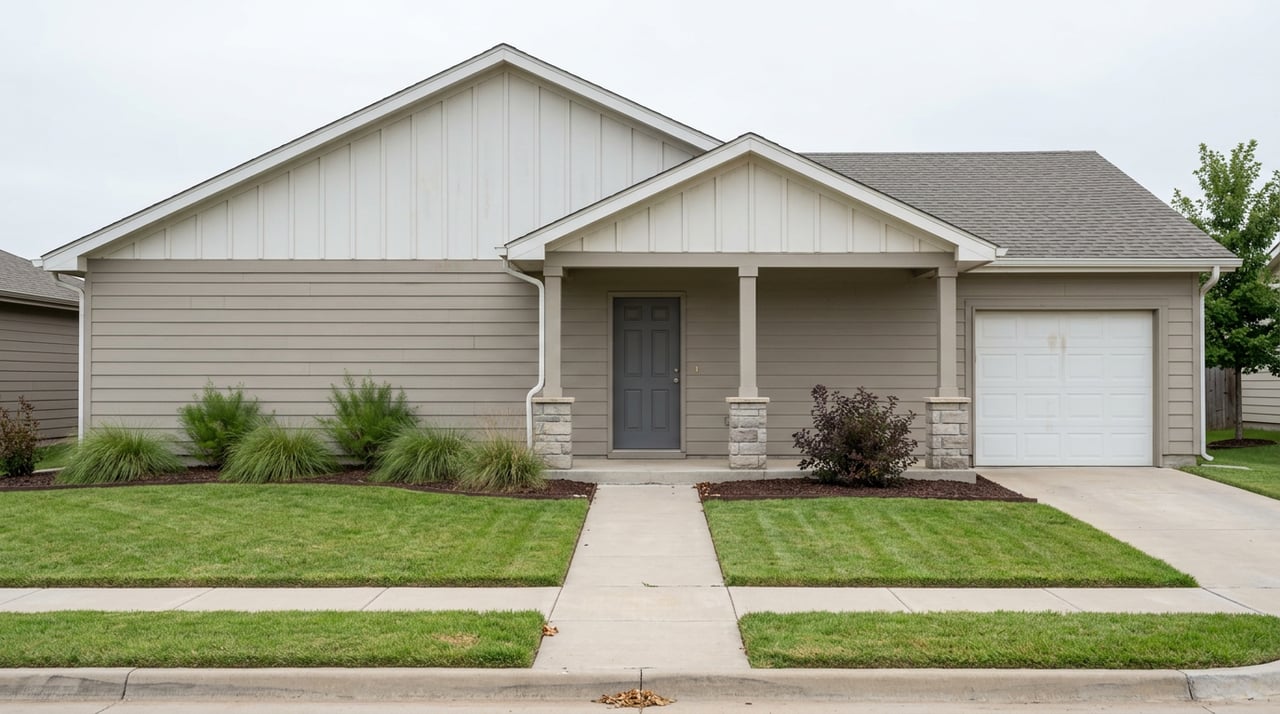
Drive out East Fairchild Street in Danville and you'll pass a low industrial building that's been running the same operation since the early 1970s. The sign still says Hyster-Yale. By the end of this year, the sign will be the only thing left standing there, because the company announced in December that it's shutting down its Danville Packing and Redistribution Center and moving the work to a new facility outside Indianapolis. Roughly 220 jobs go with it.
Drive fifteen minutes the other direction, out Lynch Road toward the Indiana line, and you'll pass a building that didn't exist three years ago. The Golden Nugget casino opened there in 2023, and its general manager, Rashad Wilson, just told a local reporter that business "keeps creeping up and creeping up and creeping up." He's not exaggerating. The numbers back him up.
Both of those things are true about Danville right now, in the same eight-mile stretch of the same small city, in the same year. If you're comparing Danville to Champaign or Decatur and you've only read the layoff headline, you're working with half the picture. The other half is a housing market that, as of this month, is moving faster than it was a year ago, not slower.
A Fifty-Year Sign Comes Down on Fairchild Street
Hyster-Yale's Danville facility has handled after-sales parts distribution for the company's North, Central and South American customers for more than five decades. The company said the current building at 1010 E. Fairchild St. no longer fits the scale it needs going forward, so the work is relocating to Avon, Indiana, with the transition wrapping up by the end of 2026. Mayor Rickey Williams Jr. said the city rezoned property at West Newell Road and Bowman Avenue and assembled an incentive package trying to keep the operation in town. It didn't work. The company chose Indiana.
This wasn't Danville's first employer exit. In 2024, Quaker Oats permanently closed its Danville plant, laying off more than 500 workers after pausing production following a December 2023 recall. That plant had opened in 1969, which means it ran for 55 years before PepsiCo shut it down for good. Vermilion Advantage's interim CEO, Tracy Wahlfeldt, called the Hyster-Yale news heartbreaking for the affected employees, and it's fair to sit with that for a second. But if you're trying to read these headlines as a signal about home values, you need to ask a different question: did the last comparable closure actually move the housing market? The answer is no, and that's the part worth understanding before you assume this one will.
The Market That Didn't Flinch
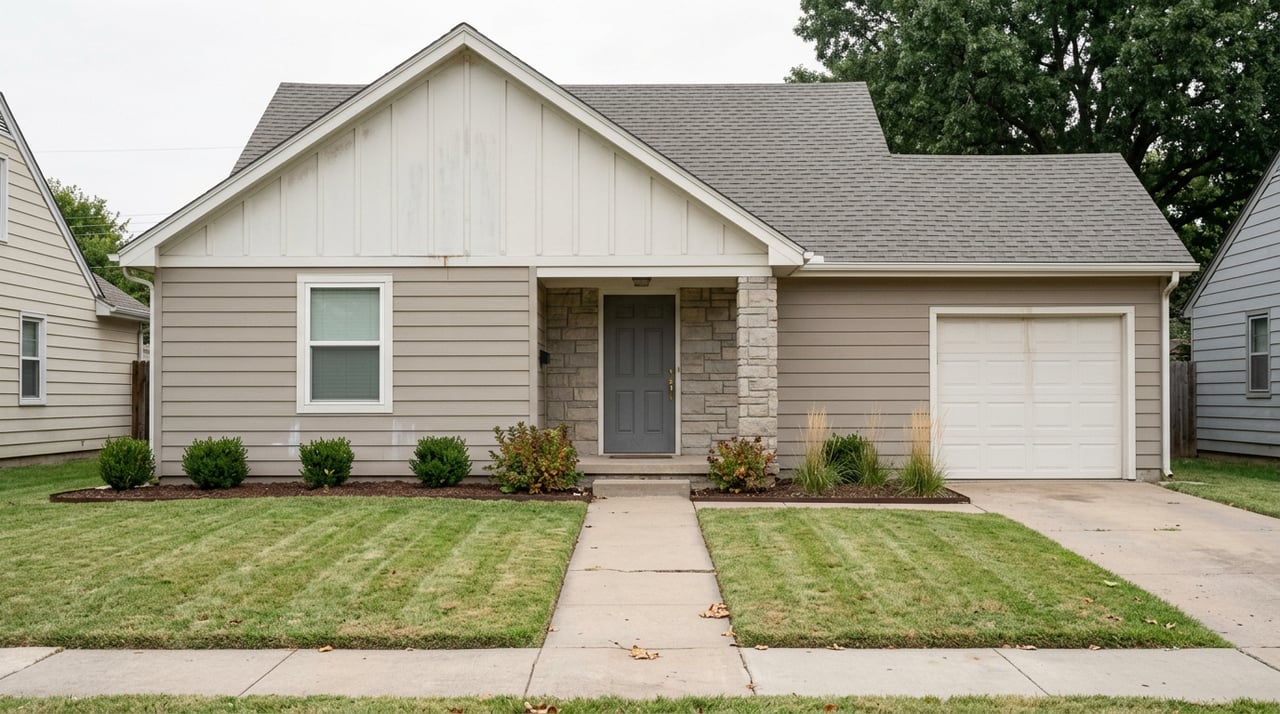
Here's what the local listing data shows heading into August 2026. Homes in Danville are selling in a median of about 62 days, which is roughly 26 percent faster than the same point last year, the year Quaker Oats announced its closure. List prices have held in the low six figures, generally landing somewhere between $95,000 and $105,000 depending on which pocket of the city you're looking at. That's not a market bracing for a shock. That's a market that's already absorbed the shock, years ago, and reset its pricing around it.
This is the piece that gets lost when a national or regional story treats "Danville job losses" as one continuous narrative. Danville's home values already reflect a 55-year-old employer closing its doors in 2024 and a housing market that shrugged. The market priced that in a long time ago, which is a big part of why entry prices here sit so far below Champaign's. A single new closure announcement doesn't reprice a market that was never built on the assumption those jobs were permanent in the first place.
Two Different Clocks, Running at the Same Time
The mistake is treating Danville's economy as one story with one direction. It's actually two separate clocks, and they're not synced.
| What happened | When | What it changed |
|---|---|---|
| Golden Nugget casino opens on Lynch Road | 2023 | New tax revenue stream begins, starts small |
| Quaker Oats plant closes after 55 years | 2024 | 500+ jobs lost, no measurable housing market disruption |
| Casino local tax share for Jan–Apr: $749,317 | 2025 | New revenue stream still ramping up |
| Hyster-Yale announces Danville exit | Dec. 2025 | 220 jobs to be phased out by end of 2026 |
| Casino local tax share for Jan–Apr: $839,708 | 2026 | Revenue jumps, funding new city projects |
The manufacturing clock runs on decades-long cycles of consolidation that mostly finished doing their damage to home values years ago. The casino clock is newer, still accelerating, and running on a completely different input: consumer spending, not industrial output. Golden Nugget's admissions climbed from 106,110 to 118,274 over the first four months of the year, comparing 2025 to 2026, even though its 19,489-square-foot gaming floor ranks 16th of 17 casinos statewide by size. That's the clock actually moving the needle on Danville's near-term development conversation, not Fairchild Street.
Where the Money Actually Landed
The interesting part for anyone thinking about buying here isn't the layoff. It's what the casino's growing tax contribution is starting to fund. City officials have talked about using freed-up capacity, including the added funding cushion from the Hyster-Yale situation, to move ahead with a planned sanitary sewer extension and an Enterprise Zone expansion aimed at supporting business growth. Meanwhile, out at the casino itself, a capital project is underway to build a covered walkway connecting the Golden Nugget to the adjacent Saltgrass Steakhouse, and officials are planning a car show in the casino's parking lot this August that could turn into a recurring venue for farmers markets and other events.
Wilson has also floated something worth watching closely if you're thinking about this corridor specifically: more mixed-use housing built around the casino property itself, on the theory that people who live nearby become repeat customers for the restaurants and entertainment going in around it. Nothing there is finalized. But it's the first time in years that new residential development in Danville has been discussed as a demand-driven idea rather than a replacement for something that closed.
What This Means If You're Actually Comparing Danville
If you're cross-shopping Danville against Champaign or Decatur on price alone, the Hyster-Yale headline might make you assume there's negotiating leverage waiting for you here that isn't showing up on the listing sheet. Based on what the local market is actually doing, that assumption doesn't hold. Sellers in the $95,000 to $105,000 range are still seeing homes move in about two months, which is faster than a year ago, not slower. A single plant closure that mirrors a pattern the market has already priced in before isn't creating the kind of buyer's market that headline alone would suggest.
What it does mean is that Danville's affordability isn't a temporary dip waiting to reverse. It's a structural feature of a market that's diversified away from single-employer dependence over multiple cycles, and it's now adding a growth engine that has nothing to do with manufacturing at all. If you're the kind of buyer who wants a lower entry cost and is comfortable that the city's economic base looks different in ten years than it did in the Quaker Oats era, that's a genuinely different conversation than "is this a distressed market."
Worth watching over the next twelve months: whether the Enterprise Zone expansion attracts a new employer to backfill some of the Hyster-Yale jobs, whether the casino's mixed-use housing talk turns into an actual proposal near Lynch Road, and whether AutoZone's ongoing hiring at its Danville distribution center, which has been posting for diesel mechanics and warehouse roles throughout this year, signals that logistics work is simply relocating within the city rather than leaving it.
Frequently Asked Questions
Does the Hyster-Yale closure mean home prices in Danville will drop? Nothing in the current listing data supports that. Homes are moving faster in August 2026 than they were a year ago, and the market already absorbed the 2024 Quaker Oats plant closure, a comparable-sized employer exit, without a measurable price reset.
Is the area near the Golden Nugget casino worth watching for future development? It's the most active development conversation in the city right now. The casino's local tax contribution jumped from $749,317 to $839,708 comparing the first four months of 2025 to the same period in 2026, and officials have discussed mixed-use housing near the Lynch Road corridor, though nothing has been formally proposed yet.
How does Danville's job market compare to Champaign's for someone weighing where to buy? Champaign's economy leans on the University of Illinois and a broader employer base, which supports higher home prices. Danville's affordability reflects a smaller, more manufacturing-dependent history, but that history is exactly what's already priced into today's lower entry costs.
Reading a headline and reading a market are two different skills, and the gap between them is usually where a buyer either finds a real opportunity or talks themselves out of one that was never actually there. If you're weighing Danville against other Central Illinois options and want someone who tracks both the job postings and the closing sheets, The Tracy Slater Group can walk you through what the numbers in this specific corridor actually mean for your situation. Schedule a free consultation and let's look at what's really moving here.