Choosing a neighborhood in Champaign County can feel simple at first, right up until you realize that one city can contain dozens of very different pockets. If you are trying to balance commute time, home style, parks, parking, or school boundaries, the details matter more than the ZIP code. The good news is that you do not need to guess your way through it. With the right filters, you can narrow your options with a lot less stress. Let’s dive in.
Start With Your Non-Negotiables
Before you compare neighborhoods, get clear on what has to work in your daily life. In Champaign County, that often means commute route, transportation options, home type, and district boundaries.
County quick facts show that major employers include the University of Illinois, Parkland College, Carle, OSF Heart of Mary, Champaign CUSD #4, and Urbana SD #116. That means your neighborhood choice is often tied to where you work, how you travel, and which routines you want to make easier.
A practical short list usually starts with a few basic questions:
- Do you want a shorter drive to work or campus?
- Do you want to use transit regularly?
- Do you prefer a single-family home, a mixed-use area, or a lower-maintenance setup?
- Do you want to prioritize park access or walkability?
- Do you need to confirm a specific school district by address?
Once you answer those questions, your search gets much more focused.
Compare Champaign County by Lifestyle
Champaign County includes several well-known communities, including Champaign, Urbana, Rantoul, Mahomet, Savoy, and St. Joseph. While people often begin with the city name, your best fit usually comes down to how each area supports your routine.
Champaign Offers Variety
Champaign gives you the widest mix of neighborhood types in the county. The city notes that it includes 39 neighborhoods that vary in size, housing style, and social composition, so it makes sense to think of Champaign as a collection of smaller submarkets rather than one single experience.
The city also highlights urban downtown, Campustown, a regional mall, and neighborhood destinations. If you want options, Champaign gives you a lot to compare, from more urban areas to neighborhoods centered around parks, shopping, or easier access to major roads.
Urbana Feels More Block-by-Block
Urbana’s downtown planning materials describe the area as pedestrian-scaled and mixed use, with connections to nearby neighborhoods and the University. If walkability matters to you, this is one reason Urbana often deserves a closer look.
Parking can also be part of the decision. The city manages downtown parking with public lots, a parking garage, and metered spaces, so if you are considering an address near downtown, it helps to think about how often you drive, where you park, and what daily convenience looks like for you.
Savoy Brings More Housing Mix Than Some Buyers Expect
Savoy can be easy to oversimplify, but its official zoning map shows a wide range of districts, including single-family, two-family, multifamily, higher-density residential, office-research, and planned-unit-development areas. In plain English, that means the housing mix can change more than buyers sometimes expect.
Savoy is served by Champaign Unit 4, and Carrie Busey Elementary is located there. If district assignment is important to you, this is a good reminder to confirm each address rather than assume based on the town name alone.
Nearby Communities Can Be Strong Fits
If you are open to looking beyond Champaign, Urbana, and Savoy, communities like Mahomet, Rantoul, and St. Joseph may belong on your list. County information identifies them as major communities, and Mahomet-Seymour CUSD #3 is a separate district centered in Mahomet.
For many buyers, the biggest questions in these areas are simple: How far do you want to drive, how often do you want to head into the core metro area, and what kind of daily pace feels right for you?
Look Beyond the City Name
This is where buyers save themselves time, and occasionally a mild identity crisis. A city name can point you in the right direction, but it will not tell you everything you need to know.
In Champaign, for example, the city’s neighborhood vision emphasizes safe, well-maintained housing, accessible public transportation, and basic commercial services. That tells you neighborhood-level differences matter, especially if you care about condition, convenience, and how much maintenance work you want to take on.
The city’s housing and neighborhood programs also include code compliance, safety home repair, home accessibility retrofits, and accessory structure demolition. That is a useful reminder that upkeep and property condition can vary by area, even within the same city.
Match the Neighborhood to Your Commute
Champaign County has a strong transportation advantage because I-57, I-72, and I-74 intersect here. If you commute across the region, highway access can be a major reason one neighborhood works better than another.
If you want a car-light lifestyle, public transit should be one of your first filters. MTD serves Champaign, Urbana, Savoy, and the University of Illinois campus, and the system includes fare options that make regular riding practical for many residents. MTD also notes that every bus and van has a front bike rack, which can matter if you like combining biking and transit.
Questions to Ask About Transportation
- How long will this commute feel during your actual work hours?
- Do you want easy access to interstate travel?
- Will you use MTD often enough for transit access to be a priority?
- If you are near downtown or campus, how important is parking?
- Do you want to bike part of your route?
A neighborhood that looks great online can feel very different at 8:00 a.m. or 5:30 p.m. That is why it helps to visit candidate areas at different times of day.
Think About Home Style and Upkeep
Your ideal neighborhood is not just about location. It is also about how you want to live inside the home and how much maintenance you are willing to manage.
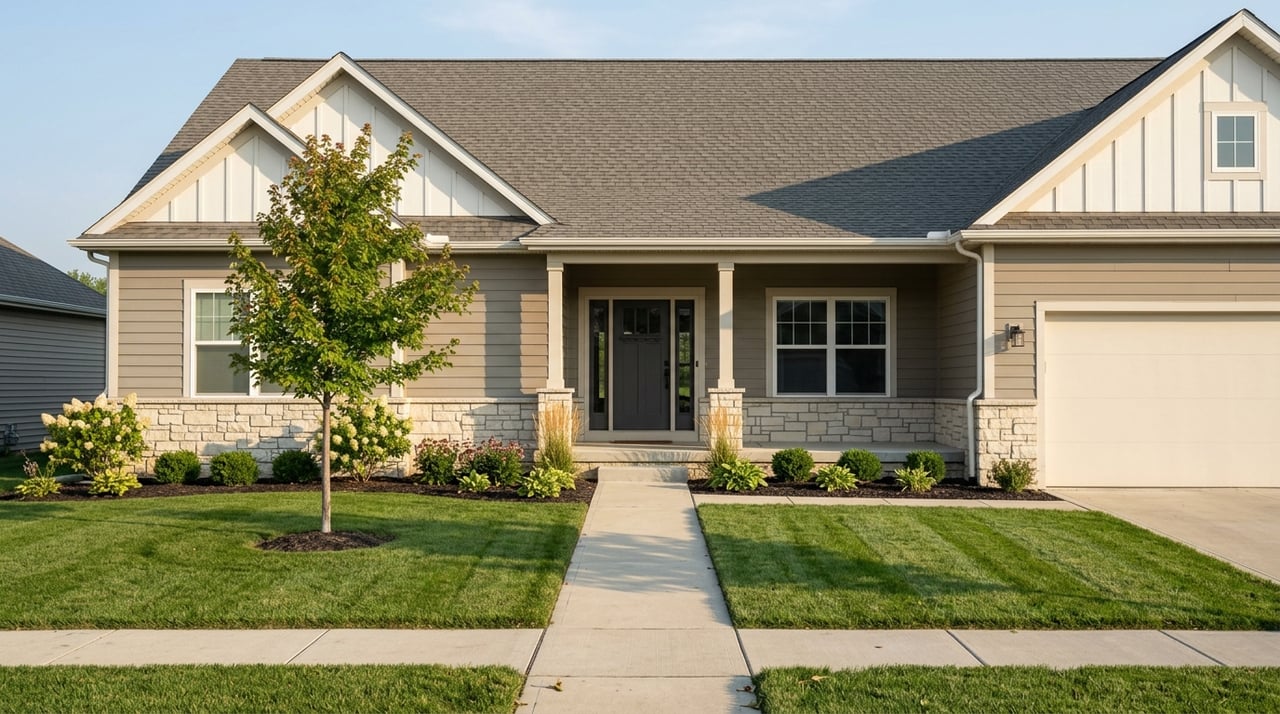
Champaign’s neighborhoods vary widely in housing style. Savoy includes everything from single-family to higher-density residential districts. Urbana’s downtown materials emphasize mixed-use and infill character. Together, those facts show why buyers should compare home type and upkeep needs, not just city labels.
If you want lower-maintenance living, you may lean toward areas with more attached or higher-density housing options. If you want more traditional single-family patterns, your search may narrow quickly once you focus on zoning, street layout, and lot style.
Weigh Parks, Recreation, and Daily Convenience
Lifestyle is not fluff. It is the difference between loving where you live and feeling like your house is always in the wrong place.
The Champaign Park District operates 62 parks covering more than 700 acres, plus 17 trail systems and 13 facilities. Urbana Park District manages 22 parks and natural areas, including Crystal Lake Park and Weaver Park. If park access, trails, or outdoor time are part of your routine, these details can help you separate one area from another.
In Champaign, the city also points to downtown, Campustown, a regional mall, and neighborhood destinations. That means you can compare neighborhoods based on whether you want a more urban daily pattern, campus proximity, or easier access to recreation and errands.
Confirm School Boundaries by Address
School district assumptions can create problems fast, so this step is worth slowing down for. Champaign Unit 4 serves Champaign, Savoy, and Bondville and includes 19 campuses serving more than 10,000 students. Urbana School District 116 serves more than 4,300 students across 11 schools.
District boundaries differ by address, which means the only safe move is to confirm the specific property you are considering. This matters whether you are buying now for current needs or thinking about how the home may fit your plans in the future.
Choose for Long-Term Fit
The best neighborhood for you today should also have a good chance of working tomorrow. In Champaign County, long-term fit often comes back to life changes like a new job, a different commute, a growing household, or a desire for lower-maintenance living later on.
Because the county includes major employers, multiple school systems, and a connected transit network, you have real options. The key is to ask not only, “Can I live here now?” but also, “Will this still work well for me a few years from now?”
A Smart Way to Short-List Neighborhoods
If you want a practical plan, keep it simple. Start with your non-negotiables, narrow to a few candidate areas, and then compare actual addresses instead of broad city names.
Here is an easy process to follow:
- Pick your top priorities, such as commute, district, home style, and park access.
- Choose two or three communities that seem to match.
- Review specific neighborhoods or addresses within those communities.
- Visit at different times of day to check traffic, parking, and general feel.
- Confirm district boundaries and transportation access before you make a move.
In Champaign County, the address-level details do the real work. That is often the difference between finding a home that is fine on paper and finding a neighborhood that truly fits your life.
If you want help sorting through Champaign, Urbana, Savoy, or nearby communities, local guidance can make the process much easier. The right advisor can help you compare the details that actually affect your day-to-day life and narrow your search with confidence. When you are ready to talk through your options, schedule a free consultation with Tracy Slater.
FAQs
What should you compare when choosing a Champaign County neighborhood?
- Focus on commute route, transportation options, home style, maintenance level, park access, walkability, and school district boundaries by address.
How are Champaign and Urbana neighborhoods different?
- Champaign offers a broad mix across 39 neighborhoods, while Urbana’s downtown planning materials emphasize a pedestrian-scaled, mixed-use setting with strong connections to nearby neighborhoods and the University.
What makes Savoy different from other Champaign County areas?
- Savoy includes a wide range of zoning and housing types, from single-family to higher-density residential, so buyers should compare specific areas carefully and confirm school assignments by address.
How important is public transit in Champaign County neighborhood searches?
- It can be very important if you want a car-light lifestyle or work near campus, downtown Champaign, or downtown Urbana, since MTD serves Champaign, Urbana, Savoy, and the University of Illinois campus.
Why should you confirm school boundaries for a Champaign County home?
- District boundaries can vary by address, so you should verify the exact property instead of assuming assignment based on the city or neighborhood name alone.
How can you short-list neighborhoods in Champaign County?
- Start with your non-negotiables, compare a few candidate areas, and visit specific addresses at different times of day to evaluate traffic, parking, and everyday convenience.